Safety at sea
3 September 2020

Navigating my way across the Atlantic Ocean from Cape Town to Salvador in Brazil is no mean feat, and in order to achieve my heady task I will need a few gadgets and safety essentials to ensure my Ocean X journey goes according to plan.
Here is some of the safety items I will need to paddle on this mammoth adventure:
Life Raft
First and foremost, this is a lifesaving essential that I hope to get my hands on soon. It’s a Switlik Inflatable Single Person Life Raft (ISPLR) and they are mostly used in the aviation industry. It’s compact and lightweight (2.8kg) – the only option for a craft as small as mine. But they come with a hefty price tag, so if anyone has one that they are not using for a few months I would be most appreciative.
ABOVE: How an EPIRB works
A PLB is a specific type of EPIRB that is typically smaller, has a shorter battery life, and unlike a proper EPIRB is registered to a person rather than a vessel. With a PLB you can summon help wherever you are on the planet, no matter how remote.
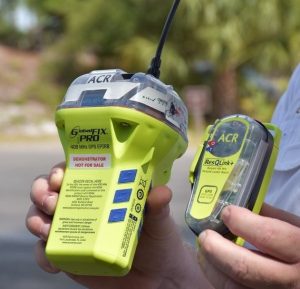
ABOVE: Example of an EPIRB & PLB
Satellite Telecommunications
I will have an Inmarsat Satellite phone that will enable voice calls depending on the need like radio interviews, advice on repairing a piece of equipment or emergency services.

The Iridium Go allows me to make voice calls and text messaging via a smartphone. It also has other capabilities like a basic email service and will be used to receive my weather updates. It is one of the three tracking units on board.
Body Leash
When outside I will always be attached to the kayak by a 10 ft body leash. I will use either a waist or leg leash depending on what I am doing.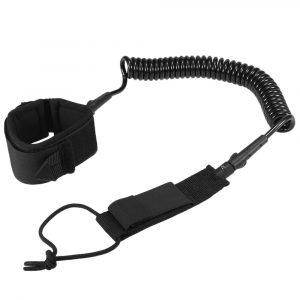
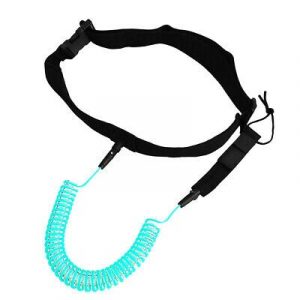
ABOVE: Leg Leash (left), Waist Leash (right)
Life jacket
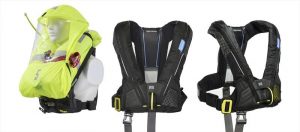
I will have an inflatable life jacket seen in the image below. My second PLB will be permanently attached to the jacket.
Flares
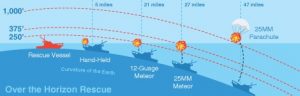
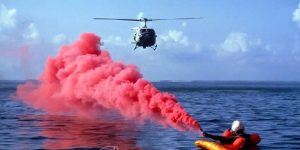
I will carry various signal flares in the form of a hand-held, rocket and smoke flare. Each type of flare is used for a specific purpose. Their purpose is to attract attention when immediate danger exists. They are only useful if someone is close enough to see them, so I need to use my good judgement when using as they are single use.See the diagram below to understand each types range

Fire Extinguisher
One small unit will be on board. Always a standard precaution!
Medical Kit
A comprehensive medical kit will be put together to cover all possible scenarios, which I find are always needed at any time.VHF Radio
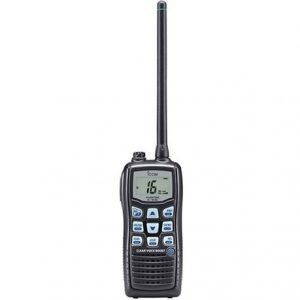
There will be two VHF radios on board, the main and most important one will be a fixed unit inside and the other a handheld unit. The fixed one has a greater transmitting power (25W) and thus a longer range than the handheld (5W).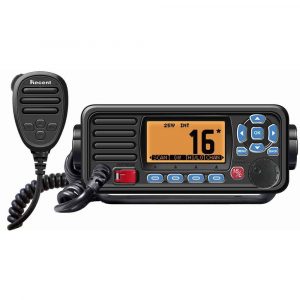
Radar Reflector
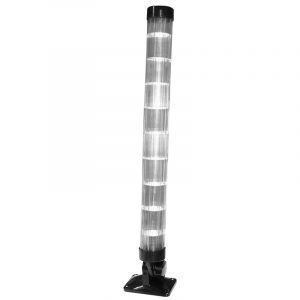
The kayak will give a very poor echo on a ship’s radar, especially in rough seas as it is so small and made of fibreglass. A tube radar reflector is simply an arrangement of metal elements crossed at several 90-degree angles in a plastic casing to reflect energy from the radars and thus enhancing the signal of the vessel.
I am being optimistic, I hopefully won’t need to use half of the above…but always be safe rather than sorry, the ocean can be a dangerous place.
Thank you to Graeme Taylor from Seaport Supply in Cape Town who will be assisting me with supplying all my safety equipment I will need for my journey. If you need any boating or marine equipment pop into their shop in Paarden Eiland and chat to a great bunch of guys.